Finch Nest Clues!

Lucas Schneider
| 14-08-2026
 · Animal Team
What's Up, Readers! Have you ever seen a finch inspect the same branch or corner before choosing a nesting spot? This careful behavior is not random, as the right location can protect eggs from rain, wind, and predators.
It can also make it easier for parents to reach nearby feeding areas. But what makes one nesting spot better than another?
Finches do not choose nesting sites according to a single rule. Their decisions are influenced by vegetation, shelter, height, food availability, disturbance, and the surrounding flight space. Some species also show strong preferences for particular nesting structures, so a site that suits one finch may be unsuitable for another.
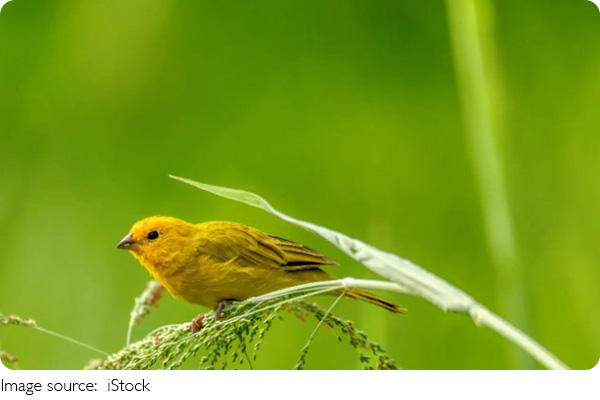
The First Priority: A Nest That Is Hard to Reach
Predator avoidance is one of the most important pressures shaping nest placement. Depending on the species and habitat, finches may face threats from snakes, small mammals, corvids, raptors, and other nest predators.
A useful nesting location therefore provides concealment without becoming impossible for the parents to access. Dense foliage can hide a nest from view, while tangled branches may make direct approaches more difficult for predators. Some finches place nests in shrubs or trees where leaves create a visual barrier from above and from the sides.
The position of the nest also matters. A site exposed on an isolated branch may provide a clear view, but it can leave eggs and chicks conspicuous. Conversely, vegetation that is excessively dense can restrict the adults' movements. The most suitable location often provides a compromise: enough cover to reduce visibility while leaving a practical entrance and exit.
Height Is More Than Just a Number
Many finches favor elevated nesting locations, but there is no universal height that every species follows. The surrounding habitat determines what is available and what works best.
A nest placed several meters above the ground can reduce access for some terrestrial predators. In woodland or shrubland, however, a lower position inside thick vegetation may provide better concealment than a much higher but exposed branch.
Height can also influence the physical conditions around the nest. Elevated vegetation may receive more airflow, while surrounding leaves and branches can provide shade during hot periods. The important factor is not simply whether a nest is high, but whether its position combines protection with suitable environmental conditions.
Shelter From Rain, Wind, and Heat
A nest has to withstand more than predators. Rain can chill eggs and nestlings, strong wind can shake a poorly supported structure, and intense sunlight can raise temperatures inside an exposed nest.
Finches often use natural features that moderate these conditions. Overhanging leaves, branching structures, and sheltered forks can help shield the nest from direct rainfall and excessive sunlight. The surrounding vegetation can also reduce wind exposure without completely blocking air movement.
This is especially important because nestlings cannot regulate their body temperature as effectively as fully grown birds. A location that becomes dangerously hot during the afternoon or repeatedly collects rainwater can create serious problems even when predators are absent.
Food Distance Can Shape the Decision
Once eggs hatch, the nest becomes a demanding feeding station. Parents may have to make repeated trips to collect seeds, insects, or other appropriate foods, depending on the species and the stage of the chicks.
For this reason, the distance between the nest and productive feeding habitat can matter. A nest located near reliable food resources may reduce the time adults spend away from their young. Shorter trips can also reduce exposure to predators during repeated journeys.
Water can be relevant as well, although its importance varies between species and local conditions. Finches obtain much of their water from their diet in some circumstances, so it would be misleading to assume that every pair deliberately chooses a nest immediately beside a water source. What matters is whether the broader territory provides dependable resources without forcing excessive travel.
A Hidden Nest Still Needs an Escape Route
Concealment is useful only when adults can reach and leave the nest efficiently. Finches are agile birds, and the flight space around a nesting site can influence whether a location remains attractive.
A nest surrounded by branches may be well hidden, but if the adults have difficulty approaching it, the arrangement becomes less practical. Nearby perches can provide convenient launch points, while open gaps between vegetation can create routes for rapid departure.
This is one reason an apparently quiet corner does not automatically become a preferred nesting site. Finches are evaluating the surrounding structure as well as the nest itself. The branches leading toward the nest, the vegetation around it, and the available flight paths all form part of the nesting environment.
Disturbance Can Change the Choice
Even a physically suitable location may be rejected if it is repeatedly disturbed. Human activity, pets, frequent movement, loud noise, or repeated interference can make a nesting area less attractive.
This does not mean every finch immediately abandons a nest after encountering a disturbance. Birds vary in their tolerance, and responses depend on species, breeding stage, and the severity of the disturbance. However, repeated disruption can increase stress and may interfere with normal parental behavior.
In gardens and aviaries, giving nesting birds a relatively quiet area is therefore more useful than simply providing a nest box or nesting material. The surroundings matter.
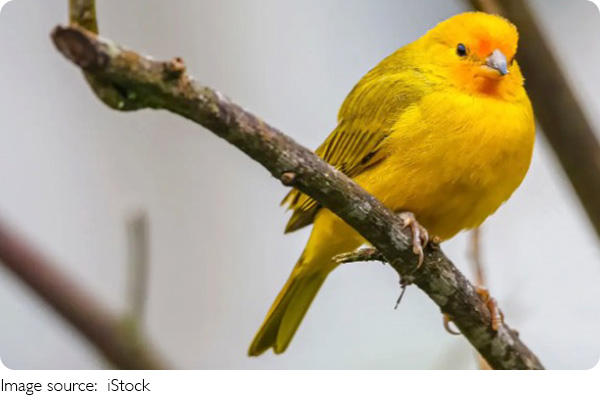
What looks like a simple choice to us is actually a combination of several environmental decisions. Finches need a location that balances concealment, structural support, weather protection, access, and nearby resources. No single feature guarantees that a site will be selected.