French Macarons

Santosh Jha
| 14-05-2026
 · Food Team
Cracking the first perfect batch of macarons is one of those kitchen moments you genuinely don't forget.
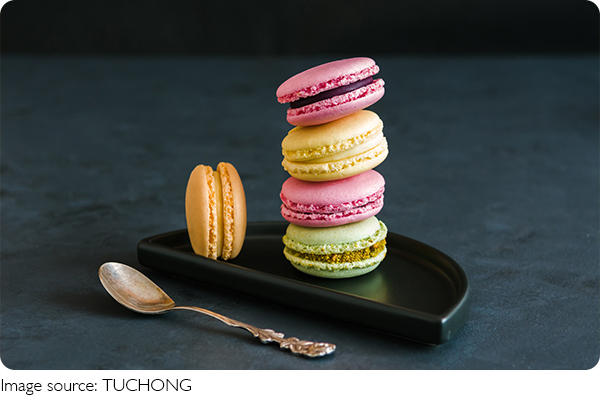
The shells are smooth, slightly domed, with that signature ruffle at the base — the "foot" — and when you bite in, there's a thin crunch giving way to a chewy, almost creamy center. Getting there takes patience and precision. But it's not impossible, not even close.
Ingredients (Makes about 24 sandwiched cookies)
For the macaron shells:
100g (1 cup) almond flour
100g (¾ cup + 3 tbsp) powdered sugar
75g (about 2½ large) aged egg whites, room temperature
¼ teaspoon cream of tartar
75g (6 tablespoons) granulated sugar
Gel food coloring (optional)
For the buttercream filling:
½ cup (113g) unsalted butter, room temperature
1½ cups (180g) powdered sugar, sifted
1–2 tablespoons heavy cream
½ teaspoon vanilla extract
Pinch of salt
Prep Is Half the Battle
Age your egg whites first. Separate them, cover loosely, and leave in the fridge for at least 24 hours. This dries them out slightly, making the meringue more stable. On baking day, let them come to room temperature for 30 minutes.
Line two baking sheets with parchment paper. Make sure all your bowls and beaters are completely clean, dry, and free of grease — any residue will prevent the egg whites from whipping.
Sift, Process, Sift Again
Combine the almond flour and powdered sugar in a food processor and pulse for about 30 seconds to create an ultra-fine mixture. Sift it into a medium bowl, discarding any large pieces that won't pass through. Then sift once more. This double-sifting step is not optional — lumps in the dry ingredients lead to bumpy shells.
Make the Meringue
Whip the egg whites on medium speed until foamy, then add the cream of tartar. Gradually add the granulated sugar while increasing to medium-high speed. Keep whipping until you reach stiff, glossy peaks. The meringue should hold its shape and not slide when you tilt the bowl. If adding color, fold in gel food coloring here — never liquid dye.
Macaronage — The Critical Fold
Add the almond flour mixture all at once to the meringue. Using a wide spatula, fold and press the batter against the bowl in a deliberate, sweeping motion. You're intentionally deflating it — but not all the way. Stop when the batter flows off the spatula in a thick, slow ribbon, and the trail sinks back into itself within about 10 seconds. Over-mix and the shells spread flat; under-mix and they split.
Transfer to a piping bag fitted with a round tip. Pipe 1.5-inch rounds onto the prepared baking sheets, spacing them 1 inch apart.
Rest, Then Bake
Let the piped shells rest at room temperature for 30–60 minutes until a dry skin forms on the surface. They should feel dry to a light touch. This is what creates the feet. Bake at 325°F (160°C) for 12–14 minutes — one sheet at a time, on the center rack.
Let them cool completely before filling. Make the buttercream: beat the butter until creamy, add powdered sugar, cream, vanilla, and salt. Pipe a small amount onto the flat side of a shell, then sandwich with another.
Refrigerate the filled macarons for at least 24 hours before eating. This sounds like torture, but the resting period lets the filling soften the inside of the shell to that perfect chewy texture you're after.
Things to Watch For
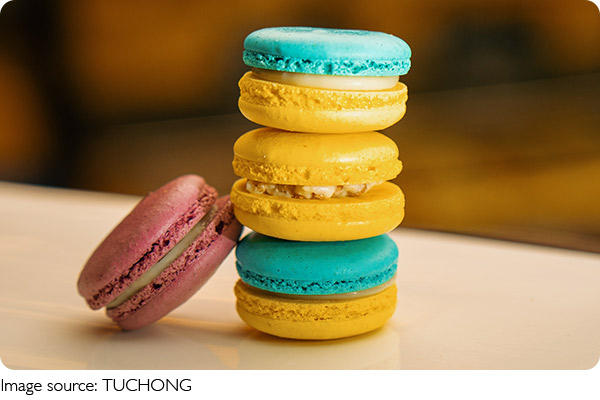
Hollow macarons usually come from under-mixed batter or underbaked shells. Cracked tops usually mean the skin didn't form long enough, or the oven was too hot. Flat, spreading cookies almost always mean over-mixed batter. And rubbery shells? Usually overmixed and overbaked together. Use a kitchen scale — cups are too imprecise for this recipe.