Light Shift

Arvind Singh
| 27-04-2026
 · Art Team
You walk into a gallery and see a sculpture standing quietly in the center of the room.
At first glance, it feels fixed—solid, unchanged, complete. But as you move slightly, or as the light shifts through the space, the entire perception begins to change. What looked soft becomes sharp.
What seemed flat suddenly gains depth. It's the same object, yet it feels different every time you look again.

This is the hidden dialogue between sculpture and light.
Shadow Builds the Structure You Don't See
Light doesn't just illuminate sculpture—it constructs it visually through shadow.
Every curve, edge, and surface transition produces a corresponding shadow. These shadows are not secondary; they are part of how the form is understood. Without them, volume feels incomplete.
A deep shadow can make a shallow detail appear dramatic. A soft gradient can smooth out a complex surface. The sculpture itself does not change, but the perception of its structure does.
In many cases, what you “see” is actually a combination of material and absence of light.
Surface Reaction Changes Everything
Different materials respond to light in different ways. Some absorb it quietly, while others reflect it sharply.
A polished surface can create highlights that move as you shift position. A rough surface scatters light, producing a more diffused and grounded feeling. These reactions influence emotional tone as much as visual clarity.
1. Reflective surfaces emphasize movement and contrast
2. Matte surfaces highlight form stability
3. Mixed textures create layered visual rhythm
Because of this, the same sculpture can feel calm in one setting and energetic in another.
Direction of Light Shapes Emotion
Where light comes from matters as much as its intensity. Side lighting reveals texture and depth. Top lighting compresses form and emphasizes silhouette. Low lighting can make shapes feel heavier and more dramatic.
As the angle changes, so does the emotional reading of the piece.
A sculpture lit from multiple directions may feel complex and open. The same piece under a single directional source can feel focused, even intense. Light becomes a silent editor, choosing what to reveal and what to hide.
Time Turns Sculpture into a Moving Experience
One of the most fascinating aspects of sculpture is that it does not stay visually static throughout the day. Natural light changes gradually, and with it, the artwork transforms.
Morning light might be soft and even. Midday light becomes sharper, emphasizing edges. Evening light stretches shadows, reshaping proportions entirely.
The sculpture itself remains unchanged, but its visual identity shifts with time. This creates a living experience rather than a fixed one.
Why Perception Is Never Fixed
What makes sculpture unique is not only its physical presence, but its dependence on conditions outside itself. Light, angle, and environment all participate in how it is understood.
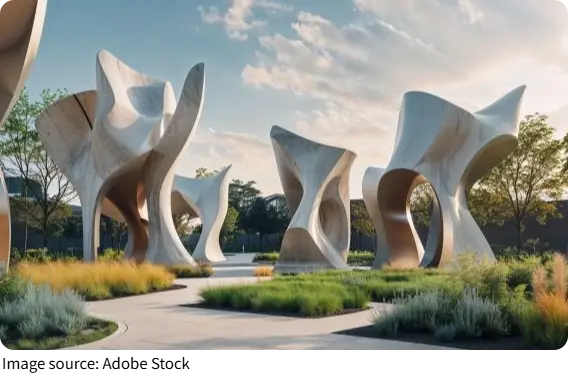
This means there is no single “correct” way to see it. Each moment offers a slightly different version of the same form.
In the end, light is not just a tool for visibility. It is an active force that reshapes meaning, depth, and emotion. A sculpture is never truly seen all at once—it is discovered again and again, every time the light changes.