Wild Goose Origins

Nolan O'Connor
| 15-04-2026
 · Animal Team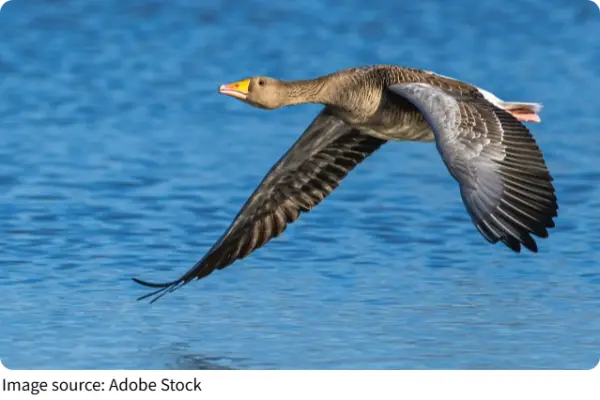
If you have ever been chased by a goose at a local park, you have met the stubborn, spirited descendant of the Greylag Goose (Anser anser).
While the domestic birds we see today are often associated with clumsy farm life, their wild ancestor is a marvel of endurance and social complexity.
Clad in mottled gray plumage with a striking orange beak, the Greylag is the original blueprint for the majority of domestic waterfowl in the West. They are rugged survivalists of the wetlands, capable of navigating thousands of miles across continents with nothing but their instincts and the support of their tightly knit family units.
The Loyalty of a Lifetime
In a world where many creatures prioritize quantity over quality in relationships, Greylag geese are famous for their devotion. They are primarily monogamous, often forming bonds that last for many years, sometimes even a lifetime. This isn't just a romantic notion; it is a survival strategy.
When a pair stays together, they become more efficient at defending nesting territories and raising their young. If a partner is lost, the surviving goose often goes through a visible period of “mourning,” characterized by low energy and a hanging head. This emotional depth has been documented by naturalists who observed that these birds recognize each other's unique voices and individual behaviors, suggesting a high level of social intelligence.
The Aerodynamics of Teamwork
When you look up and see a "V" formation cutting through the autumn sky, you are witnessing a masterclass in physics and cooperation. Greylag Geese are heavy birds, and flying long distances requires immense energy. By flying in a staggered formation, each bird (except the leader) benefits from the "upwash" created by the wingtips of the bird in front of it.
This aerodynamic strategy allows the flock to fly up to 70% farther than a single bird could fly alone. The leadership position is the most exhausting, so the geese rotate frequently. When the leader tires, it cycles to the back of the formation, and another takes its place. It is a selfless system of shared labor that ensures the survival of the entire group during grueling migrations.
Fascinating Habits of the Greylag
The Greylag is more than just a flyer; it is a highly intelligent creature with some surprising behavioral traits:
1. The Sentry System: While the flock grazes on grass or grain, at least one bird always remains "on guard" with its neck fully extended, scanning for predators like foxes.
2. Gosling Protection: Young geese, or goslings, are taught to follow their parents immediately after hatching. They "imprint" on the first moving object they see, a biological mechanism that ensures they never stray from safety.
3. Preen Gland Secrets: To stay waterproof while swimming in freezing lakes, they rub an oil from a special gland near their tail all over their feathers using their beaks.
4. Serrated Beaks: Their beaks have "tomia," which are small, tooth-like serrations made of horn. These aren't true teeth, but they are incredibly effective at "sawing" through tough marsh grasses.
A Sentinel of the Wetlands
Beyond their physical traits, Greylag Geese serve as the "alarm system" of the natural world. Their loud, honking calls can be heard from miles away, often acting as a warning to other wildlife when a threat is near. Because they are so vigilant and loud, they were historically used as "guard animals" for estates and farms. They cannot be bribed with food by intruders in the same way a dog might; their loyalty is strictly reserved for their own kind and their territory.
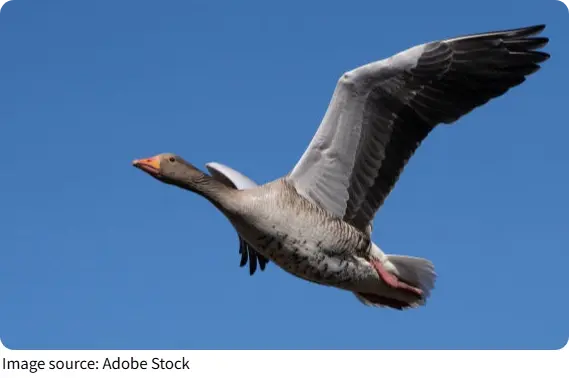
The story of the Greylag Goose is a reminder that we are often surrounded by extraordinary beings hidden in plain sight. We might dismiss them as "just geese," but their lives are filled with the same themes that define our own: loyalty, cooperation, and the grit to endure long journeys. They teach us that true strength doesn't always come from individual power, but from the ability to work in harmony with others. Next time you hear that familiar honk from above, remember that you are listening to a survivor—a bird that carries the weight of history in its wings and the heart of a pioneer in its chest.